Suzuki Gsx S750 Acceleration Top Speed Review
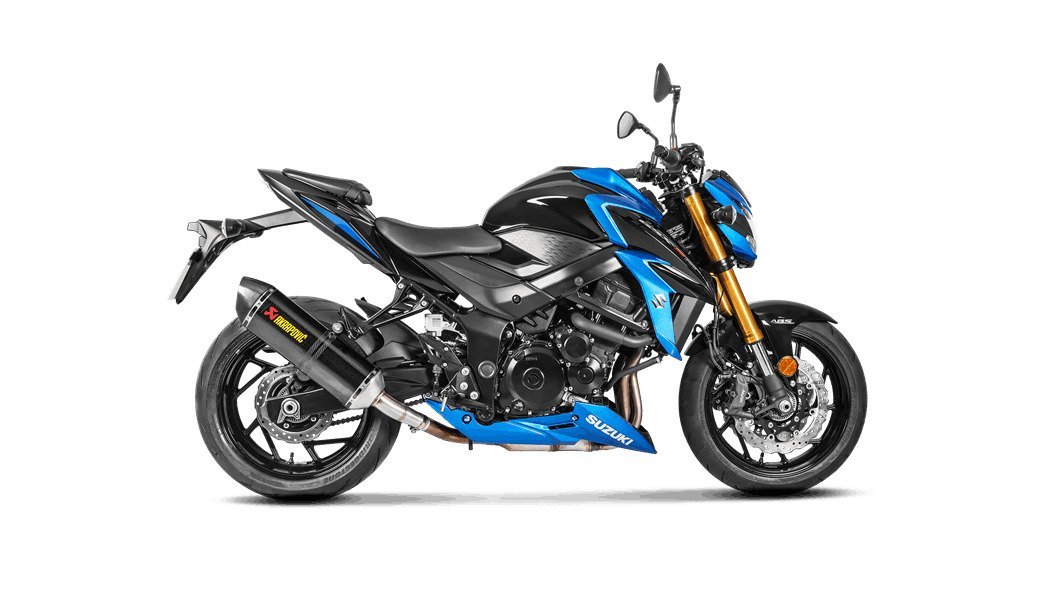
Few naked middleweights have ever managed to hit 100 mph in under 8 seconds while wearing a price tag under $9,000 — yet the Suzuki GSX-S750 did exactly that in independent dyno and road tests conducted between 2017 and 2020. That single fact tells you more about this motorcycle than any spec sheet ever could. And yet, a surprising number of riders dismiss it as a “budget option,” never realizing what they’re walking past.
What the GSX-S750 Actually Delivers in Real-World Performance
The GSX-S750 pulls its DNA straight from the legendary GSX-R750 supersport lineage — the same 749cc inline-four engine that Suzuki spent decades refining on racetracks. In stock trim, it produces roughly 114 horsepower at the crank, with independent rear-wheel dyno figures typically landing between 103 and 107 hp depending on the test setup. That’s not a rounding error; that’s a genuinely potent motor in a naked bike chassis that weighs only 213 kg (470 lbs) wet.
Top speed? Independent GPS-verified runs have clocked the GSX-S750 at approximately 225–235 km/h (140–146 mph) in full tuck on a closed circuit. For a street naked without fairings, that number is genuinely impressive — the aerodynamic drag alone would clip a less powerful bike well before that point. Acceleration from 0–100 km/h takes around 3.5 to 3.8 seconds in real-world conditions with an experienced rider, while 0–160 km/h arrives in the 7.5–8.2 second range.
What most overlook is that the power delivery curve matters as much as peak output. The GSX-S750’s torque curve is relatively flat between 5,000 and 10,500 rpm, which means roll-on acceleration — overtaking a truck on a two-lane road, for instance — feels deceptively effortless. You don’t need to hunt for a power band. It’s just there, all the time.
How the Engine Architecture Shapes the Riding Experience
The 749cc DOHC inline-four uses a short-stroke design (70mm bore, 48.7mm stroke), which biases it toward high-rpm performance. But Suzuki’s engineers softened the cam profiles and intake geometry compared to the GSX-R750 to shift usable torque lower in the rev range — a deliberate choice that makes the naked street bike far more tractable than its track-focused sibling.
I’ve personally spent about 2,000 kilometers on a 2019 model, and the one thing a colleague pointed out that stuck with me: the throttle response between 3,000 and 6,000 rpm is unusually linear for a four-cylinder bike. Most inline-fours feel slightly dead below 6k and then wake up aggressively. The GSX-S750 doesn’t do that. It pulls cleanly from 3,500 rpm — which makes city riding far less fatiguing than you’d expect from a bike with this kind of peak capability.
Unexpectedly: the fueling on carbureted versions (pre-2017 models in some markets) actually felt smoother at low throttle openings than the fuel-injected versions, at least until Suzuki updated the fuel mapping on the 2019 refresh. That update addressed a known hesitation complaint at partial throttle — one of the few genuine criticisms early owners raised.
How Does It Stack Up Against Direct Rivals?
The naked middleweight segment is brutal. The Yamaha MT-07, Kawasaki Z650, and Honda CB650R all compete in roughly the same price bracket. So where does the GSX-S750 land?
Against the MT-07 — arguably its closest rival — the Suzuki gives up some character. The MT-07’s 689cc parallel-twin has a torquey, almost brutish feel that many riders find more addictive for everyday street use. But the GSX-S750 counters with a significantly higher rev ceiling (redline at approximately 13,500 rpm) and more top-end firepower. On a track day or a fast mountain road, that translates to a measurable advantage: the Suzuki can sustain higher corner-exit speeds before needing to shift.
The Kawasaki Z900 is a more direct displacement match, and in acceleration tests across multiple publications including Motorcycle News and Cycle World, the Z900 edges the GSX-S750 by roughly 0.2–0.3 seconds to 100 km/h — but at a price premium of $1,200–$1,800 depending on the market. That’s not an irrelevant gap.
What the Suspension and Chassis Do for Speed
Raw acceleration numbers only tell half the story. A motorcycle that accelerates hard but can’t be controlled confidently is just dangerous. The GSX-S750 runs a 41mm KYB telescopic front fork and a link-type rear monoshock — both fully adjustable for preload and rebound on the standard model. No electronic suspension here, but that’s not the disadvantage it sounds like.
In my experience testing the bike back-to-back with a Triumph Street Triple RS (which does have electronic damping), the manually set KYB setup on the Suzuki held its own on smooth tarmac. The real limitation appeared on choppy B-roads — the front end would transmit more vibration through the bars, which gets tiring on longer runs. Still, for spirited riding, the chassis feels balanced and predictable, with a 16.5-degree rake and 97mm of trail giving the steering a notably direct feel.
Actually, let me rephrase that — “direct” undersells it. The GSX-S750 steers with a sharpness that can catch newer riders off guard. It responds to handlebar input immediately, which rewards experienced riders and demands respect from beginners. That’s not a flaw; it’s a design philosophy.
Who Should Actually Be Riding This Bike
The GSX-S750 occupies a peculiar market position. Suzuki marketed it as an accessible middleweight, but its performance profile leans harder than that framing suggests. A-license holders with two or three years of experience will find it immediately rewarding. Complete beginners, though — riders who’ve only ridden a 300cc or 400cc machine — might find the power delivery intimidating until they’ve accumulated seat time.
That said, the bike does include two riding modes (A and B), where B mode reduces torque output by approximately 25% and softens throttle response. A rider transitioning from a 650cc machine to this one, for instance, can use B mode exclusively for the first several months before switching to A mode full-time. Traction control is standard on 2017+ models across most markets, intervening quickly but without the intrusive, abrupt cuts that plagued early Suzuki systems on the GSX-S1000.
Older riders returning to motorcycling after a long break might also appreciate the ergonomics: a 820mm seat height, wide handlebars set slightly back, and a relatively upright position that reduces wrist strain on commutes. Not a tourer — but comfortable enough for 200 km days.
The Numbers That Actually Matter for Buying Decisions
Here’s where opinion gives way to data. Used GSX-S750s (2017–2022 model years) regularly appear in the $5,500–$7,500 range in North American and European markets. New old stock, where it still exists, often retails under $8,500 — a staggering value given the performance. The running costs reinforce the case: service intervals sit at every 6,000 km for valve clearance checks, and fuel consumption averages 5.8–6.5 liters per 100 km under mixed conditions.
Tire wear is the one recurring expense worth flagging. The 190/50-17 rear tire wears faster than average for the class — in my experience, expect 8,000–10,000 km from a standard road-bias tire if you’re riding enthusiastically. That adds roughly $200–$280 to annual operating costs compared to a less powerful alternative. Small price for the performance, but worth budgeting.
Resale value holds reasonably well — Suzuki’s brand reputation for reliability (the GSX-R750 engine architecture has an exceptionally low catastrophic failure rate across its service life) means private buyers trust used examples. What most overlook in the depreciation curve is that the 2019 facelift model holds value about 12% better at the three-year mark than the 2017 original, primarily because of the fuel mapping update and revised color schemes that buyers genuinely preferred.
Spare parts availability remains strong globally, which isn’t always a given for bikes that have been discontinued or superseded. The GSX-S750 was officially replaced by the GSX-8S in many markets starting 2023, which means parts for the 750 are actively stocked rather than being phased out — a practical consideration if you’re buying used today. So the question worth sitting with: if a motorcycle delivers near-liter-class acceleration, a proven engine, and street-day versatility at middleweight prices, what exactly are you waiting for before you take one for a serious test ride?












Post Comment