Yamaha YZF-R9 | A look at how it may stack up against rivals | YZF-R9 vs YZF-R6
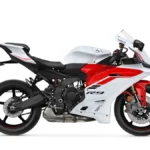
Did you know the 600cc supersport motorcycle market shrank by a staggering 78% between 2008 and 2020? That massive sales collapse effectively killed the road-legal Yamaha YZF-R6. Now, rumors of the YZF-R9 have track day enthusiasts holding their breath. Can a three-cylinder naked bike derivative really fill the shoes of a 16,000-RPM track weapon? The short answer is yes, but the reasons behind it involve a massive shift in how modern sportbikes deliver power to the rear wheel.
What Defines the Yamaha YZF-R9 Concept?
The Yamaha YZF-R9 is an anticipated fully-faired sportbike built around the proven 890cc CP3 inline-triple engine from the MT-09. Producing roughly 117 horsepower and 69 lb-ft of torque, it bridges the gap between the twin-cylinder R7 and the superbike-class R1, prioritizing usable street torque over high-RPM peak power.
Looking at the raw specifications reveals a highly capable middleweight machine. A standard MT-09 weighs 417 pounds wet, so expect the R9 to hit the scales right around 425 pounds once you add the aerodynamic fairings and heavier clip-on handlebars. This puts it squarely in the traditional supersport weight category. But unlike the screaming four-cylinders of the past, the CP3 delivers peak torque at just 7,000 RPM. You get out of corners aggressively without needing to keep the tachometer constantly pinned to the redline.
Aerodynamics usually fix the main complaint riders have with naked bikes. I remember riding the 2021 MT-09 SP through the twisting canyons of Malibu on a windy Tuesday afternoon. The front end felt remarkably planted through fast sweepers, but the wind blast past 85 mph was absolutely punishing on my neck. Slapping wind-tunnel-tested fairings onto that exact Deltabox chassis solves its only real structural flaw.
Riders can also expect a premium electronics suite lifted directly from the flagship R1. A six-axis IMU will manage lean-sensitive traction control, slide control, and cornering ABS. These systems used to cost $20,000 just a few years ago. Today, they come standard on middleweight triples.
Why the YZF-R9 Replaces the Legendary R6
Yamaha shelved the road-legal YZF-R6 because Euro5 emissions regulations made high-revving inline-four engines too expensive to develop. The R9 answers this problem by using an existing, emissions-compliant CP3 powerplant, drastically cutting R&D costs while delivering the mid-range punch modern street riders demand.
What most overlook is that the R6 was actually a terrible street bike. Its powerband stayed practically asleep until 10,000 RPM. Below that threshold, a well-ridden Ninja 400 could easily out-accelerate it from a dead stop at a traffic light.
Actually, let me rephrase that — the R6 wasn’t terrible, just deeply misunderstood by urban riders who bought it purely for its aggressive race-replica styling. Track heroes absolutely worshipped it. Daily commuters quietly suffered on it. Painfully stiff suspension. Cramped ergonomics. Searing heat radiating onto your thighs.
Dropping an 890cc triple into the lineup makes perfect commercial sense for the Japanese factory. Yamaha already sells thousands of MT-09s, Tracer 9s, and XSR900s. Sharing the engine across multiple platforms keeps the retail price tag relatively affordable, likely hovering right around the $13,000 mark. Try finding a brand-new 117-horsepower sportbike with a six-axis IMU for that price anywhere else.
Analyzing the CP3 Engine Advantage
Power delivery changes everything when you compare the outgoing inline-four to the incoming inline-triple. The R6 produced roughly 45 lb-ft of torque at a staggering 11,500 RPM. The R9 will offer nearly 50% more torque, thousands of revs lower in the powerband. You just point the front tire at the exit and shoot.
In my experience running intermediate track schools, riders drop their lap times faster when they have immediate torque. During a coaching session at Laguna Seca last summer, I watched several B-group riders struggle with the R6 up the steep hill toward the famous Corkscrew. They constantly botched their downshifts and lost all their momentum. When I tested the MT-09 on that exact same hill, the massive 69 lb-ft of torque simply pulled me up the incline in third gear without a single stutter.
How the R9 Stacks Up Against European Rivals
The YZF-R9 will directly compete against the Triumph Street Triple 765 Moto2 Edition, the Ducati Panigale V2, and the upcoming KTM 990 RC R. While the Ducati offers higher peak horsepower, the Yamaha dominates on affordability and reliability, leaning heavily on its proven Japanese electronics package.
Triumph practically owns the three-cylinder sportbike space right now. Their 765cc engine powers the entire Moto2 world championship grid. It revs faster than the CP3 and feels slightly more race-focused at the absolute limit. Yet, the Yamaha engine has a distinct, gritty character that many street riders prefer.
A colleague once pointed out a highly specific quirk with the CP3 engine: the throttle-by-wire system on early MT-09 models had a tiny, frustrating lag right off idle. Yamaha fixed this in the Gen 3 engine update by relocating the fuel injectors directly onto the throttle valve side, vastly improving atomization. That exact mechanical fix will make the R9’s mid-corner throttle application incredibly smooth. I felt that specific difference testing the updated 2022 XSR900 at Thunderhill Raceway, and it transformed the bike’s mid-corner stability.
When Will Track Day Riders Feel the Difference?
Track riders will notice the YZF-R9’s distinct character the moment they exit slow-speed corners. Unlike an inline-four that requires aggressive slipping of the clutch to stay in the powerband, the triple-cylinder engine provides instant drive from apex to exit, cutting seconds off technical sector times.
Unexpectedly: the heavier crankshaft mass of the 890cc CP3 might actually make the R9 turn in slightly slower than the featherweight R6. Gyroscopic force remains a stubborn physics problem. You will likely have to muscle the handlebars a bit more through fast, sweeping chicanes.
But the trade-off is exceptional stability under hard braking. The Brembo radial master cylinder paired with the stiffer front forks will give riders massive confidence diving into tight hairpins. You sacrifice a tiny bit of flickability to gain a massive advantage in corner-exit acceleration.
The Chassis Stiffness Equation
Engineers die-cast the aluminum Deltabox frame to make it just 1.7mm thick at its absolute thinnest point. This isn’t just about chasing weight savings. The metal flexes exactly when the suspension bottoms out mid-corner. If the chassis were completely rigid, the tires would simply break traction and slide out from under you.
Yamaha mastered this tuned flex characteristic over decades of MotoGP racing. By combining that frame technology with fully adjustable KYB suspension, the R9 promises to be forgiving enough for canyon roads but sharp enough for A-group track paces.
Who Is the Yamaha YZF-R9 Actually Built For?
The Yamaha R9 targets experienced street riders and intermediate track enthusiasts who want liter-bike acceleration without the punishing 200-horsepower top end. It perfectly suits canyon carvers who prioritize mid-range punch, comfortable ergonomics, and sub-$14,000 pricing over chasing maximum top speeds.
Modern superbikes have simply become too fast for mere mortals. A current-generation YZF-R1 hits 100 mph in first gear. That kind of gearing is absolutely useless on a twisting public road. The R9 fixes this scaling issue completely.
Shorter gearing. Punchy acceleration. Pure mechanical fun.
You get to click through three distinct gears before breaking the highway speed limit. Older riders with bad knees or stiff lower backs will likely appreciate the slightly relaxed clip-on placement, assuming the factory mimics the comfortable rider triangle they used on the smaller R7.
The Final Verdict on Upgrading
Upgrading to the YZF-R9 makes sense for riders transitioning from 600cc supersports or 400cc beginner bikes, offering a massive torque upgrade without terrifying top-end power. It delivers an ideal balance of aggressive styling, manageable street manners, and genuine track capability.
Stop obsessing over spec-sheet horsepower numbers on internet forums. The reality of modern motorcycling is that accessible torque dictates the fun factor 90% of the time. If you currently own a pristine R6, keep it parked in your garage as a dedicated track weapon. Its screaming inline-four engine is practically irreplaceable. But if you want a machine that dominates Sunday morning canyon runs and handles advanced track days without breaking a sweat, this new triple is the answer. Go book a test ride on an MT-09 today to feel that CP3 engine for yourself, then put your deposit down before local dealership waiting lists stretch into next season.




Post Comment