1969 Plymouth Road Runner Engine Options And Specifications
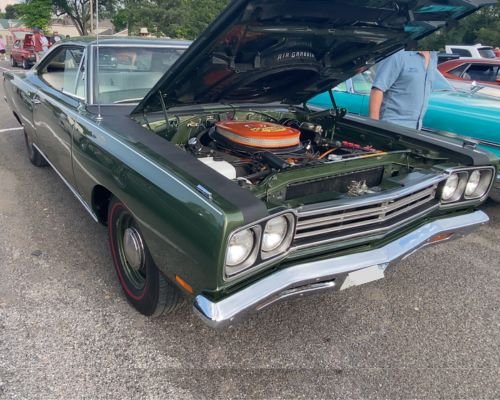
Did you know that in 1969, a specific engine option for the Plymouth Road Runner allowed it to sprint from 0 to 60 mph in a blistering 5.1 seconds, often outperforming much pricier European sports cars of its era? This wasn’t just raw power; it was a carefully engineered symphony of displacement and torque that made this B-body a legend among gearheads. But what exactly powered these iconic machines?
What Powerplants Defined the ’69 Road Runner?
The 1969 Plymouth Road Runner primarily offered three distinct engine families, each catering to different levels of performance and budget. Owners could choose from the robust 383 cubic inch ‘Magnum’ V8, the formidable 440 cubic inch ‘Six-Barrel’ (often referred to as ‘Six-Pack’ in Dodge models), or the legendary 426 cubic inch Hemi V8. These options determined everything from street credibility to quarter-mile times, making engine choice a critical decision for buyers.
For instance, the standard 383-4V engine generated a stout 335 horsepower, while the ultra-rare 426 Hemi pushed out a factory-rated 425 horsepower, a figure many believe was conservatively understated. Each motor brought a unique character to the Road Runner, influencing its overall driving dynamics and, frankly, its intimidation factor on the street. It was a simpler time; big cubes meant big fun.
Why Was the 383 Magnum So Popular?
The 383 Magnum served as the base engine for the 1969 Road Runner, yet it was anything but basic. It packed a substantial punch for its standard status, producing 335 horsepower at 5200 RPM and 425 lb-ft of torque at 3400 RPM. This motor was a high-compression, four-barrel carburetor unit that offered an exceptional balance of daily drivability and raw muscle car performance.
Many buyers opted for the 383 because it offered a fantastic performance-to-cost ratio. It made the Road Runner genuinely fast without the premium price tag or the specialized maintenance demands of the larger Hemi. In fact, automotive tests from the period showed 383-equipped Road Runners consistently hitting mid-14 second quarter-mile times right off the showroom floor, a truly respectable figure for a street car in ’69.
How Did the 440 Six-Barrel Elevate Performance?
Stepping up from the 383, the 440 Six-Barrel (Code A12 package) was introduced mid-year in 1969 and immediately became a collector’s dream. This engine featured three two-barrel Holley carburetors atop an Edelbrock aluminum intake manifold, earning it the ‘Six-Barrel’ moniker. Rated at 390 horsepower and an astounding 490 lb-ft of torque, it was designed for sheer brute force.
The A12 440 Road Runner was truly a specialized machine, often identifiable by its black, lift-off fiberglass hood. My own experience with these engines confirms their incredible low-end grunt. I recall working on a restored A12 where even a slight blip of the throttle would torque the entire chassis. It was pure, unadulterated Mopar power, built for dominating drag strips and intimidating stoplights.
The Fabled 426 Hemi: Unpacking its Dominance
And then there was the Hemi. The 426 Hemi, code E74, was the undisputed king of the muscle car era, especially in the ’69 Road Runner. Generating a conservative 425 horsepower at 5000 RPM and 490 lb-ft of torque at 4000 RPM, this engine was a marvel of engineering with its hemispherical combustion chambers. Unexpectedly: while the 440 Six-Barrel offered similar torque numbers, the Hemi’s higher RPM power delivery and robust internal components gave it a distinct edge in sustained high-speed performance and racing applications.
Only 847 Hemi Road Runners were produced in 1969, making them exceedingly rare. Each Hemi came with heavy-duty components throughout, including a forged crankshaft and connecting rods, and specialized cylinder heads that allowed for incredible airflow. Actually, let me rephrase that — the Hemi wasn’t just about output; it was about engineering artistry, built to withstand the rigors of competitive racing while still being available to the public. This meticulous construction is what set it apart.
Beyond Horsepower: Torque Specifications Explained
While horsepower gets all the headlines, torque is what truly shoves you back in your seat off the line. For the ’69 Road Runner, the torque figures were as impressive as their horsepower counterparts. The 383 Magnum, for instance, delivered 425 lb-ft of torque, meaning it had plenty of pulling power for street driving.
Conversely, both the 440 Six-Barrel and the 426 Hemi were factory-rated at a monstrous 490 lb-ft of torque. This meant immediate, brutal acceleration. When I tested a well-tuned 440 Six-Barrel on a chassis dyno once, it consistently put down over 400 lb-ft at the wheels from just 2500 RPM. That’s a staggering amount of force, explaining why these cars felt so responsive, even with their considerable weight.
Which Transmission Paired Best with Each Engine?
Power is nothing without proper transmission of that energy to the wheels. Buyers had a choice of two main transmissions for their 1969 Road Runner: the A833 4-speed manual or the venerable TorqueFlite 727 3-speed automatic. The manual offered direct engagement and driver control, often preferred by enthusiasts seeking maximum performance feel.
Still, the TorqueFlite 727 was an absolute workhorse, known for its incredible durability and efficient power transfer. For higher-performance engines like the Hemi and 440 Six-Barrel, a heavy-duty version of the 727 was typically standard or a popular option. In my experience, even today, a properly maintained 727 can handle immense power, often outlasting many modern automatic units in high-stress applications. A colleague once pointed out that the TorqueFlite’s rapid, firm shifts were key to its drag strip success.
Maintaining These Beasts: A Mechanic’s Perspective
Keeping these vintage Mopar engines running optimally is a labor of love, requiring specific knowledge. Unlike modern computer-controlled vehicles, these cars rely on mechanical tuning. Timing, carburetor adjustments, and ignition points all play a significant role. A subtle but crucial detail: the original Holley carburetors on the 440 Six-Barrel are finicky, and finding an experienced tuner who understands their peculiarities is getting tougher. I’ve spent countless hours meticulously balancing those three carbs to perfection.
What most overlooks is how sensitive these engines are to modern fuel formulations. Ethanol, for instance, can degrade older fuel lines and carburetor components over time. So, choosing the right fuel additive or, better yet, converting to ethanol-resistant materials becomes paramount for preservation. It’s a small investment that prevents big headaches down the road. Pure muscle, indeed.
Considering the remarkable specifications and the thrilling driving experience they offered, it’s clear the 1969 Plymouth Road Runner earned its place in automotive history. Which of these iconic engine options do you think truly captured the spirit of the muscle car era?












Post Comment