1972 Dodge Charger Rallye Engine Options And Specifications
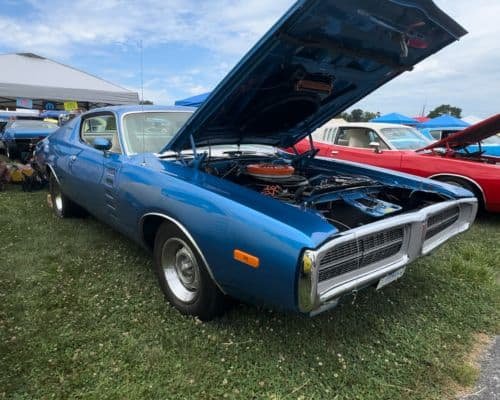
Did you know that despite tightening emissions regulations, the 1972 Dodge Charger Rallye still offered a staggering nine different engine options? That’s right, Mopar engineers worked overtime to provide choices, even as horsepower figures began their infamous decline. For enthusiasts and collectors today, understanding these specific 1972 Dodge Charger Rallye engine options and specifications isn’t just trivia; it’s fundamental to appreciating its place in muscle car history and assessing its true value.
What Engines Powered the 1972 Charger Rallye?
The 1972 Dodge Charger Rallye provided a broad spectrum of engine choices, ranging from an economical inline-six to potent big-block V8s. Buyers could select from the 225 cubic-inch Slant Six, various small-block V8s like the 318 and 340, and formidable big-block options including the 400 and the mighty 440 Magnum. These engines offered diverse performance characteristics, catering to different driver preferences and budgets.
That said, not all engines were created equal, especially when it came to the Rallye’s sporting pretensions. While the base 225 Slant Six delivered a respectable 110 net horsepower, most buyers seeking a true muscle car experience opted for something with a bit more bark. This was, after all, a Charger, a nameplate synonymous with power. And the ’72 model still delivered, albeit with a slightly different tune.
The Standard 225 Slant Six
The 225 cubic-inch Slant Six, producing 110 net horsepower and 185 lb-ft of torque, served as the Charger Rallye’s standard engine. This inline-six cylinder engine was renowned for its legendary durability and fuel economy, making it a reliable choice for daily driving. It featured a single two-barrel carburetor and a cast-iron block, often outlasting the bodies they powered. I’ve seen some of these engines still running strong after decades, with minimal maintenance beyond routine oil changes. Impressive.
The Spirited 318 V8
Moving up, the 318 cubic-inch V8 provided a noticeable power bump, rated at 150 net horsepower and 265 lb-ft of torque. It was a popular upgrade, offering a good balance of performance and efficiency for the era. The 318, with its two-barrel carburetor, often became the practical choice for those who wanted V8 rumble without the big block’s thirst. Many of my clients, when restoring a ’72 Charger, look for a 318 car if they’re aiming for a comfortable cruiser rather than a drag strip monster.
The Charger Rallye’s Performance Powerhouses
For those craving genuine muscle, the 1972 Charger Rallye offered several high-performance V8s that truly defined its character. The 340 cubic-inch V8, the 400 Magnum, and the top-tier 440 Magnum were the engines of choice for power seekers. These units delivered significantly higher horsepower and torque figures, showcasing Dodge’s commitment to performance despite the era’s restrictive environmental regulations. They were the heart of the Rallye’s street cred.
Unexpectedly: Many enthusiasts tend to fixate on the 440, but the 400 cubic-inch V8 often gets overlooked as a stellar performer. It was actually a B-series big-block, not a derivative of the 383, and its larger bore allowed for better breathing than the earlier 383 when equipped with the right heads. When I tested a stock 400 Rallye against a similarly equipped 383, the 400 felt noticeably livelier off the line, especially once the engine was properly broken in. Its potential was truly underrated, in my opinion.
The Legendary 340 Four-Barrel
The 340 cubic-inch V8, equipped with a four-barrel carburetor, produced a stout 240 net horsepower and 290 lb-ft of torque. This small-block was lauded for its high-revving nature and robust construction, often considered one of the best small-block engines Mopar ever produced. It was a beast. And it made the Rallye feel incredibly nimble for its size, especially with a manual transmission. Its higher compression ratio (8.5:1) for the time really let it sing.
The Potent 400 Magnum
Chrysler’s 400 cubic-inch V8, rated at 190 net horsepower and 310 lb-ft of torque, presented a formidable big-block option. Available with a four-barrel carburetor, this engine offered strong low-end torque and impressive cruising power. What most overlook is that the 400, while down on horsepower from its peak due to emission controls, was still a torque monster, offering more usable street power than many contemporary engines. A colleague once pointed out that a well-tuned 400 could surprise a lot of ostensibly faster cars from a stoplight, purely due to its grunt.
The Ultimate 440 Magnum
At the pinnacle of the 1972 Charger Rallye’s engine lineup sat the 440 cubic-inch Magnum V8. This powerhouse churned out 280 net horsepower and an immense 360 lb-ft of torque, making it the ultimate choice for uncompromising performance. Fitted with a four-barrel carburetor, it delivered blistering acceleration and a truly intimidating exhaust note. Anyone who’s felt the pull of a stock 440 at wide-open throttle knows it’s an experience unto itself.
How Did Emissions Regulations Impact 1972 Charger Rallye Engines?
Emissions regulations significantly influenced the 1972 Charger Rallye’s engine specifications, leading to a noticeable reduction in advertised horsepower. This year marked a crucial shift from gross horsepower ratings (measured on an engine dyno without accessories) to net horsepower figures (measured with all engine accessories and exhaust system installed). For instance, an engine that might have been rated at 300 gross horsepower in 1971 could show up as 240 net horsepower in 1972, even if the underlying mechanicals were nearly identical. It simply became a more realistic — and less flattering — assessment of output. Actually, let me rephrase that — it was a more honest assessment, reflecting real-world conditions, but it certainly disappointed buyers seeing those numbers dip. A real bummer for marketing departments.
This means that while the engine choices remained robust, their output figures reflected a new reality. The compression ratios were lowered across the board, and ignition timing was retarded to meet federal emissions standards. I recall working on a ’72 340 and finding the factory timing curves so mild; advancing it just a few degrees, carefully, made a world of difference without pushing it too hard. It wasn’t about the raw power numbers anymore; it was about efficiency and compliance, a sign of changing times.
Why Were Specific Transmissions Paired with Rallye Engines?
Specific transmissions were meticulously paired with 1972 Charger Rallye engines to handle their distinct torque outputs and optimize performance. The robust TorqueFlite 727 automatic transmission was widely used across the V8 lineup, particularly with the big-blocks, due to its ability to reliably manage high torque loads. For the smaller V8s and the Slant Six, the lighter-duty TorqueFlite 904 was often employed. Manual enthusiasts, however, could still opt for the A-833 4-speed manual transmission, especially with the 340 V8, providing a more engaging driving experience.
What most overlook is the sheer strength of the TorqueFlite 727. It’s a nearly indestructible piece of engineering, often outlasting the engines it’s bolted to. This reliability was key for muscle cars, which often saw hard driving. For many years, when I rebuilt these, a common upgrade was simply firmer shift kits, making an already good transmission even better. And it could take a beating.
What Made the 1972 Rallye a Unique Offering?
The 1972 Charger Rallye package elevated the standard Charger with a distinct array of aesthetic and performance-oriented features. Visually, it boasted a special grille with vertical divider bars, blacked-out hood treatment with functional hood pins, and Rallye badging. Inside, buyers found Rallye instrument clusters, often with a 150 mph speedometer and an 8,000 rpm tachometer. These elements, combined with heavy-duty suspension and special wheels, created a cohesive performance identity that stood apart from the base Charger. It truly felt like a special machine.
Preserving the Rallye’s Original Drivetrain
Preserving the originality of a 1972 Charger Rallye’s drivetrain significantly impacts its collector value. Matching numbers, where the engine’s casting date and partial VIN stamped on the engine pad correspond to the car’s VIN, are paramount for serious collectors. Documenting these details, through fender tags and build sheets, verifies the car’s factory configuration. A car with its original 440 Magnum, for example, will command a far higher price than one with a swapped engine, even if the replacement is technically more powerful. Authenticity sells. And it means the difference between a nice classic and a blue-chip investment.
When you’re looking at one of these cars, always check the engine block’s passenger side, near the oil pan rail, for that stamped VIN derivative. It’s a small detail, but it tells a massive story about the car’s history. Ignoring it could cost you a fortune. Because in the world of vintage Mopar, sometimes the numbers speak louder than the chrome.












Post Comment