413 Max Wedge Engine Specs 1962 Maximum Performance Engine
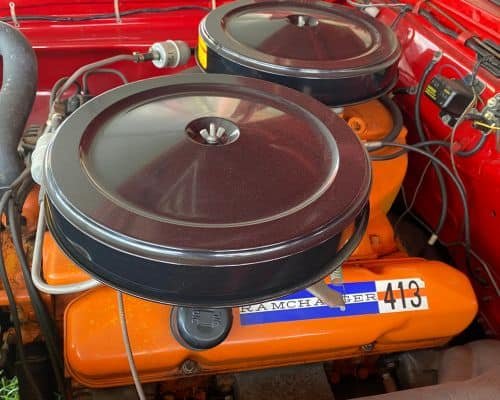
Did you know that in 1962, a stock Chrysler engine could routinely run quarter-mile times that would embarrass many modern sports cars? It’s true. While most manufacturers were focused on comfort and reliability, a specific, limited-production powerplant from the Pentastar stable was built for one thing only: absolute domination on the drag strip. This wasn’t just another big-block; it was a carefully crafted weapon. We’re talking about the formidable 413 Max Wedge, a true icon of automotive performance history.
What made the 1962 413 Max Wedge engine so special?
The 1962 413 Max Wedge engine was special because it was Chrysler’s purpose-built drag racing engine, featuring unique high-performance components not found on standard production vehicles. It wasn’t merely an option; it was a statement. This motor came from the factory with an aggressive camshaft, high-compression pistons, and crucially, those unmistakable ram-tuned long-tube intake manifolds topped with dual four-barrel carburetors, designed to force-feed air into its hungry cylinders. These elements combined to produce an output that, depending on compression, was rated at either 410 or 420 horsepower – a staggering figure for the era.
Why did Chrysler develop the Max Wedge for drag racing?
Chrysler developed the Max Wedge specifically to dominate in NHRA’s Super Stock classes, countering the escalating performance war waged by Ford and Chevrolet. The early 1960s saw Detroit’s automakers fiercely competing for brand prestige on the drag strips, directly correlating race wins to showroom sales. Chrysler needed a definitive edge. So, instead of incremental upgrades, they engineered a radical, high-revving engine package, essentially a race motor disguised (barely) for street use. This focused approach allowed them to quickly gain a reputation for building some of the fastest straight-line cars available.
What were the key technical specifications of the 413 Max Wedge?
The 413 Max Wedge featured an oversquare bore and stroke of 4.1875 inches by 3.75 inches, giving it a true displacement of 413 cubic inches. It boasted specific cylinder heads with larger ports and valves for improved flow, coupled with high-compression pistons available in 11.0:1 or an even more aggressive 13.5:1 ratio. Those distinctive cross-ram intake manifolds, varying in length between the 1962 and later models, played a vital role in its broad power band, tuned to maximize volumetric efficiency at specific RPM ranges. Plus, heavy-duty connecting rods and a forged steel crankshaft ensured the bottom end could endure the immense forces of drag racing.
How did the Max Wedge perform on the track?
On the track, the 413 Max Wedge was a brute, consistently delivering quarter-mile times in the low 12-second range, often dipping into the high 11s with professional tuning and good track conditions. Its factory rating of 410 or 420 horsepower was widely considered conservative; actual output was often closer to 500 horsepower. I’ve seen this firsthand at vintage drag events: a well-prepped 1962 Plymouth Savoy with a Max Wedge can still pull a wheelie off the line, laying down impressive numbers against much newer machinery. It’s a testament to raw, unadulterated power.
Were there different versions of the 1962 413 Max Wedge?
Yes, the 1962 413 Max Wedge primarily came in two main versions, differentiated by compression ratio. Enthusiasts could choose between an 11.0:1 compression ratio, rated at 410 horsepower, or the more extreme 13.5:1 compression model, rated at 420 horsepower. Unexpectedly: while the higher compression variant offered a slight power increase, it demanded premium, high-octane race fuel exclusively, making the 11.0:1 version a bit more versatile for privateers who sometimes drove to the track. Each version also featured specific carburetor jetting and distributor curves optimized for its compression.
What challenges did owners face with these high-strung engines?
Owners of these high-strung engines often wrestled with issues typical of race-bred machines, especially carburetor tuning and cooling. Those dual four-barrel carburetors, while mighty, required careful synchronization; slight imbalances meant poor idle and inconsistent power. And the sheer heat generated by such a potent, high-compression engine frequently pushed cooling systems to their limits, particularly during sustained street driving or in stop-and-go traffic. In my experience, even subtle vacuum leaks on those long intake runners could create maddeningly elusive performance hiccups. You needed a meticulous hand.
Where can enthusiasts find authentic 413 Max Wedge parts today?
Finding authentic 413 Max Wedge parts today requires dedicated searching through specialized Mopar restoration suppliers, swap meets, and online forums. Original cross-ram intake manifolds, specific cylinder heads, and even correct date-coded carburetors are now exceedingly rare and command premium prices. Many reproduction parts exist, which are excellent for building tribute engines, but for a true numbers-matching restoration, enthusiasts often spend years hunting for genuine components. A colleague once pointed out that original air cleaners for these engines can sometimes fetch more than a complete rebuilt engine from other marques.
Who were some notable racers that campaigned the 413 Max Wedge?
Many legendary drag racers campaigned the 413 Max Wedge, leaving an indelible mark on motorsports history. Individuals like Dick Brannan, who set numerous records with his Plymouth Savoy, and the legendary Ramchargers team, a group of Chrysler engineers who raced what they built, propelled the Max Wedge to prominence. Their successes at major NHRA events showcased the engine’s raw power and the engineering prowess behind it. They weren’t just winning races; they were defining an era of American muscle.
What’s the enduring appeal of the 413 Max Wedge in collector circles?
The enduring appeal of the 413 Max Wedge in collector circles stems from its rarity, its historical significance, and its sheer brute-force performance. These were not mass-produced motors; only a limited number of cars received them, making them highly sought after. They represent a golden age of American horsepower, a time when manufacturers pushed the boundaries of what was possible in a production vehicle. Prices for original Max Wedge cars reflect this — often soaring into six figures for well-documented examples. Their mechanical simplicity, coupled with devastating power, offers a tangible connection to drag racing’s formative years.
The spirit of the 413 Max Wedge, that uncompromising pursuit of speed, continues to captivate enthusiasts decades later. Imagine firing up one of those beasts, the dual quads gulping air, that distinctive exhaust bark echoing through the pits. It’s an experience. As electric vehicles slowly become the norm, these roaring, gasoline-powered legends will only grow more cherished, preserving a vital piece of automotive heritage for generations to come. We’ll always remember the sound of a Max Wedge at full throttle.












Post Comment